
Looking after someone is one of those jobs that feels small in the moment and huge when you look back. If you’ve ever thought about caring for seniors, helping families with childcare or supporting people with daily tasks but only have weekends free, then weekend caregiver jobs could be a great fit.
This guide is for people who want a meaningful part-time caregiver role: students, parents, retirees or anyone wanting weekend caregiving work that pays and makes a difference.
I’ll walk you through what the job looks like, how much you can expect to earn in different places, how to get started and practical tips for being great at it.
What is a weekend caregiver job?
Put simply: a weekend caregiver helps someone with everyday living on Saturdays and/or Sundays. That can mean:
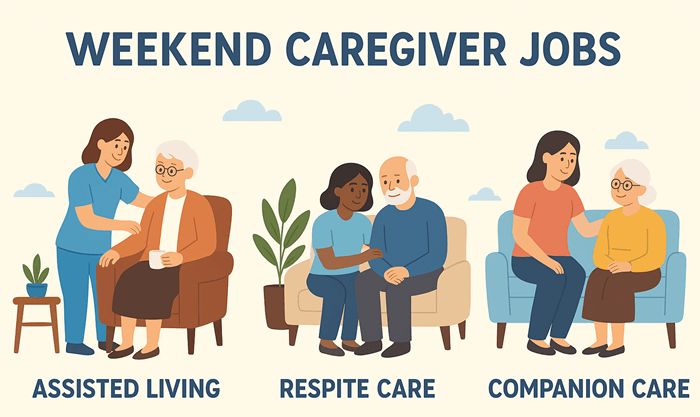
- Assisted living or home visits for older adults (help with bathing, meal prep, medication reminders).
- Short-term respite care so primary carers can rest or work.
- Babysitting or child-focused care during weekend shifts.
- Companion care such as spending time, chatting, accompanying a person to appointments.
Many families and agencies prefer people who can reliably cover weekend shifts because that’s when they most need help.
When marketed right, home helper weekend roles can be steady and emotionally rewarding.
Who hires weekend caregivers?
There are a few types of employers:
- Home care agencies that schedule carers for client visits.
- Private families looking for part-time help (e.g., weekend respite for a parent).
- Residential care homes and assisted-living facilities seeking additional weekend staff.
- Agencies and platforms that match caregivers with short shifts and weekend work.
Why caregiver jobs are critically important around the world?
A United Nations report found a shortage of about 13.6 million formal long-term care workers as of 2015, meaning many older people worldwide lack access to qualified care – United Nations
Home health and non-medical care in the U.S. face shortages: for example, one source projects deficits of 151,000 non-medical/home health nursing workers by 2030 and 355,000 by 2040 – UDS Foundation.
A report by Committee for Economic Development of Australia (CEDA) warns that the aged-care workforce shortage could reach a shortfall of 110,000 direct care workers within a decade, and possibly up to 400,000 by 2050. – SBS News
The number of care workers in the EU alone was about 6.2 million in 2022 (around 3% of total EU employment) and job openings (due to growth + replacements) total over 4.3 million between 2022 and 2035 – CEDEFOP
Key highlights
- Weekend caregiving and home care shifts are now seen as essential services, not merely optional add-ons.
- Part-time weekend caregiver roles play a vital role in closing workforce gaps, especially when full-time staff aren’t available.
- Flexible caregiving jobs including weekend or evening shifts provide consistent, reliable support that allows people to live safely and independently at home.
- For job seekers, weekend and part-time caregiving positions offer strong growth potential with relatively low entry requirements and meaningful work opportunities.
How much do weekend caregiver jobs pay?
Pay varies a lot by country, experience and the complexity of care needed. Below are realistic ranges and sources you can check.
United States
- Average caregiver hourly rates vary; ZipRecruiter reports weekend caregiver average around $15.64/hour (national average can vary by city and demand). More experienced private caregivers often earn $17–$25/hr, especially in urban areas.
- Care.com estimated the national average hourly rate for in-home caregivers at about $22.02/hr (varies by state). This site is commonly used by families to find in-home help.
United Kingdom
- UK rates for care assistants / home carers are commonly reported between £10–£15/hr, with averages around £11–£14/hr depending on region and employer. Glassdoor and industry reports give a good snapshot. Source: Indeed
Australia
- Australia tends to pay more in nominal terms; Payscale and local aged-care reports show hourly rates for in-home or live-in care varying widely — roughly AU$18–AU$35/hr depending on role, with specialist roles higher.
Source: Payscale
Takeaway: If you plan to do elderly care weekend jobs or home care weekend shifts, check local listings (Indeed, ZipRecruiter, Care.com) to set your expected hourly rate. Rates go up if you have training (Certified Nursing Assistant (CNA), specific certifications) or work nights/weekend premium hours.
Do you need training or certification?
Short answer: it depends where you are and what type of care you’ll provide.
- Basic companion or non-medical home helper roles often require no formal license. However, families and agencies prefer people who’ve completed basic caregiver training (first aid, dementia awareness).
- Medical or clinical tasks (medication administration, wound care) usually require certification (e.g., CNA in the U.S., Care Certificate modules in the UK, formal Home and Community Care (HACC)/National Disability Insurance Scheme (NDIS) training in Australia).
- Many online and local programs teach essential caregiver skills, from basic safety to proper lifting techniques.
Tip: Even a short recognised course (CPR, first aid, safeguarding) makes you more hireable and lets you charge higher rates.
Read more: 5 Useful Places to Find Weekend Jobs Online and Offline in 2025
How to find weekend caregiver jobs
- Local home care agencies — Many have weekend shifts and need part-time workers. Reach out, tell them you want weekend-only availability.
- Job boards & platforms — WeekendEarn.com, Indeed, ZipRecruiter, Care.com and local classified sites often list short weekend roles. Search keywords: weekend caregiver jobs, elderly care weekend jobs, home helper weekend.)
- Community centres & noticeboards — Families post local weekend needs on community boards or Facebook groups.
- Gig platforms — Some regional apps list one-off caregiving or companionship jobs (especially for student workers).
- Word of mouth — Let friends, neighbours, and university noticeboards know you’re available. Care roles are often filled by recommendation.
How to start — a step-by-step plan
- Decide what level of care you’ll provide. Companion/household help vs. medical/clinical tasks.
- Get basic training. First aid, dementia awareness, safe lifting. These short courses from the American Red Cross short courses are a great way to get started.
- Prepare a short resume. Highlight availability (weekends), any caregiving experience, training and references.
- Apply to agencies and families. Be honest about what you can do and your availability.
- Start with a trial shift. It helps both you and the client check fit and chemistry.
- Ask for feedback and build references. Good references lead to recurring weekend work.
What a typical weekend shift looks like
A weekend shift could be 4–8 hours. Tasks often include:
- Preparing meals and feeding assistance.
- Helping with bathing or grooming (if trained/comfortable).
- Medication reminders (not always administering).
- Light housekeeping and laundry.
- Companionship: conversation, walking, reading, accompanying to appointments.
Be punctual, patient and respectful because soft skills matter a lot in caregiving.
How to set your rate (and what to charge)
- Check local averages (see sources above). That gives you a starting point.
- If you have special training (CNA, dementia care, phlebotomy), charge a premium.
- For live-in or overnight weekend shifts, rates are higher or sometimes offered as a flat daily fee.
- Consider travel time and transport costs when accepting a weekend visit.
Example phrasing for clients: “My rate for weekend companion care is $X/hour — this includes travel up to Y miles. For overnight shifts I charge $Z flat.”
Staying safe and professional
- Verify the family/agency before accepting a job by checking their IDs or agency registration.
- Use written agreements for hours, pay and duties.
- Don’t share personal banking details unnecessarily. Consider cash, bank transfer or agency payroll.
- If you’re doing intimate personal care, make sure training and consent are clear.
Real stories: Why people choose weekend caregiving work
Real Story #1
“I will always work in healthcare until I am no longer able. I was working private homecare for a family. I provided care for their mother, Marg, who was in Hospice.
She experienced a lot of pain, so I would ask her to tell me about her life. She loved to talk about her late husband. Knowing that my patient/resident is happy with the care that I am providing them makes me feel appreciated.
I love meeting new people and learning different ways to care for them.” Jerica Harvey, Home Care Technician – Medical-Surgical
Real Story #2
“I have been a home care aide for 25 years. I have made my career caring for people.
My wish is that someday my career is viewed as a professional well-paid career that people will seek to do themselves and find it as rewarding as I have.” Connie Cochran, Home Care Aide
Most say the same thing: caregiving is hard but meaningful. You really can see the difference you make in someone’s day. Source: iowacaregivers
FAQ — Weekend Caregiver Jobs
Q1: Do I need a license to work as a weekend caregiver?
A: Not always. For basic companion or home-help roles, formal licensing is not always required but training (first aid, safeguarding, dementia awareness) is highly recommended. If the role includes medical tasks, certifications like CNA (U.S.) or recognised care certificates (UK/Australia) are usually required.
Q2: Can students do weekend caregiving work?
A: Yes. Many students pick up weekend caregiver shifts because they’re flexible and not tied to weekdays. Make sure you’re clear about your limits and get basic training. Families appreciate reliability and good communication.
Q3: How much can I earn doing elderly care weekend jobs?
A: It depends on location and experience. In the U.S. averages tend to be in the $15–25/hr range for private care; in the UK £10–£15/hr; Australia often higher in AUD terms. Check local listings to set your rate.
Q4: Is this emotionally demanding work?
A: Yes. Caregiving requires patience and emotional resilience. But many carers also find it deeply rewarding. If you’re starting, consider short trial shifts to see how it feels.
Q5: Where do I find safe weekend shifts?
A: Trusted home care agencies, reputable job boards (WeekendEarn.com, Indeed, Care.com, ZipRecruiter), and local community groups are the best starting points. Always check reviews and verify clients.
Final thoughts
If you want a part-time caregiver role that fits weekends and gives you real human connection, this work can be wonderfully rewarding.
Start with a bit of training, set realistic pay expectations and focus on reliability. Once families trust you, weekend caregiving work becomes steady and meaningful.
Need weekend caregiver help or looking for part-time weekend care work?
Find or post weekend caregiver jobs for FREE at WeekendEarn.com — connect with real people who care!
Comments